
Recorrido adulto
Área 6. De arte paleolítico a Patrimonio Mundial
Con la ayuda de estas mesas interactivas podremos profundizar más en cinco aspectos del arte rupestre de innegable importancia: el arte paleolítico cantábrico, como contexto cultural de la cueva de Tito Bustillo, la declaración como Patrimonio Mundial y por tanto la evidente conexión entre nuestros yacimientos y los Europeos, la relación entre el arte rupestre y la naturaleza, los problemas de conservación y las diferentes teorías interpretativas propuestas para el significado del arte Pleistocénico.
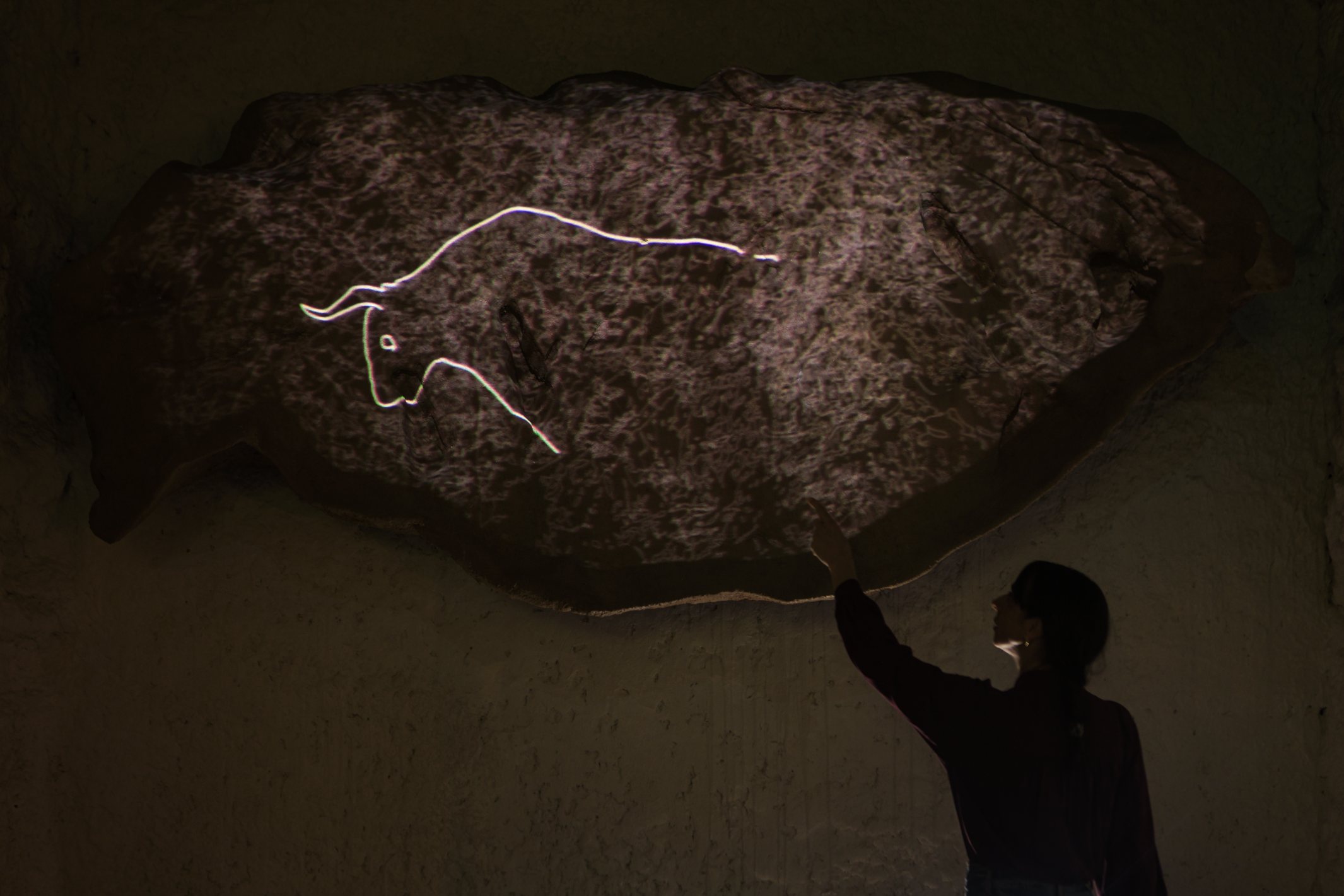
Frente a nosotros y suspendidas en el aire, cuelgan recreaciones en gran formato, de objetos singulares de otras cuevas asturianas, arte mueble único y representativo como: la cabeza de Entrefoces (Morcín), el cárabo o el búho de La Viña (Oviedo) o el pájaro de El Buxu (Cangas de Onís).
Recorrido adulto
Bereich 6. Von der paläolitischen Kunst bis hin zur Erbe der Menschheit
Mit Hilfe dieser interaktiven Tische können wir auf fünf unbestritten bedeutende Aspekte der Höhlenkunst tiefer eingehen: die atlantische paläolitische Kunst als kultureller Hintergrund der Tito-Bustillo-Höhle. Erklärung zum Weltkulturerbe und folglich die offensichtliche Verbindung zwischen unseren und europäischen Lokalitäten. Erhaltungsprobleme und verschiedene Auslegungstheorien, die für die Bedeutung der Pleistozänkunst vorgeschlagen wurden. Uns gegenüber hängen, in der Luft schwebend, großformatige Wiedergaben einzigartiger Gegenstände aus anderen asturischen Höhlen – einmalige und repräsentative Kleinkunst wie der Kopf von Entrefoces (Morcín), der Waldkauz bzw. der Uhu von La Viña (Oviedo) oder der Vogel von El Buxu (Cangas de Onís).
Recorrido adulto
Aire 6. De l'art paléolithique au patrimoine mondial
À travers plusieurs tables interactives, les visiteurs peuvent approfondir sur cinq aspects de l'art rupestre avec une importance indiscutable : l'art paléolithique cantabrique, comme contexte culturel de la grotte de Tito Bustillo. La déclaration en tant que Patrimoine mondial et donc, l'évidente connexion entre nos gisements et les gisements européens. La relation entre l'art rupestre et la nature. Les problèmes de conservation et les différentes théories interprétatives proposées pour la signification de l'art pléistocène. Face à nous et suspendues en l'air, il y a des représentations à grande échelle de pièces singulières d'autres grottes asturiennes, art mobilier unique et représentatif comme la tête d'Entrefoces (Morcín), le carabe ou l'hibou de La Viña (Oviedo) ou l'oiseau d'El Buxu (Cangas de Onís).
Recorrido adulto
Area 6. From Palaeolithic art to World Heritage
With the aid of these interactive tables we will deepen further into five aspects of rupestrian art of undeniable importance: Cantabrian Palaeolithic art, as the cultural context of the Tito Bustillo cave. It being declared World Heritage and, therefore, the obvious connection between our sites and European ones. The relationship between rupestrian art and nature. The problems regarding conservation and the different interpretation theories proposed on the meaning of Pleistocene art. Before us and suspended in the air we find large-format hanging recreations of singular objects from other Asturian caves, unique and representative portable art such as: the head of Entrefoces (Morcín), the hoot owl or owl of La Viña (Oviedo) or the bird of El Buxu (Cangas de Onís).
Recorrido adulto
Área 6. D’arte paleolíticu a Patrimoniu Mundial
Cola ayuda d’estes meses interactives vamos poder afondar más en cinco aspectos del arte rupestre d’una importancia que nun se pue negar: l’arte paleolíticu cantábricu, como contestu cultural de la cueva d’El Pozu’l Ramu, la declaración como Patrimoniu Mundial y, polo tanto, la conexón evidente qu’hai ente los nuestros xacimientos y los europeos, la rellación ente l’arte rupestre y la naturaleza, los problemes de caltenimientu y les distintes teoríes interpretatives propuestes pal significáu del arte pleistocénicu. Delantre de nós y colingaes nel aire, tenemos recreaciones en formatu grande d’oxetos singulares d’otres cueves asturianes, arte mueble único y representativo como: la cabeza d’Entefoces (Morcín), el cárabu o curuxón de La Viña (Uviéu) o el páxaru d’El Buxu (Cangues d’Onís).